Season’s first rail parcel van departs Jammu for Mumbai carrying 12 ton cherries
The season’s first rail van carrying 12 tonnes of Kashmir’s juicy deep-red cherries departed for Mumbai from here early this morning.
Divisional Commissioner Kashmir briefed the meeting on the water levels at Sangam, Ram Munshi Bagh and Asham, saying that the water level has receded below the danger mark.




File Photo: IANS
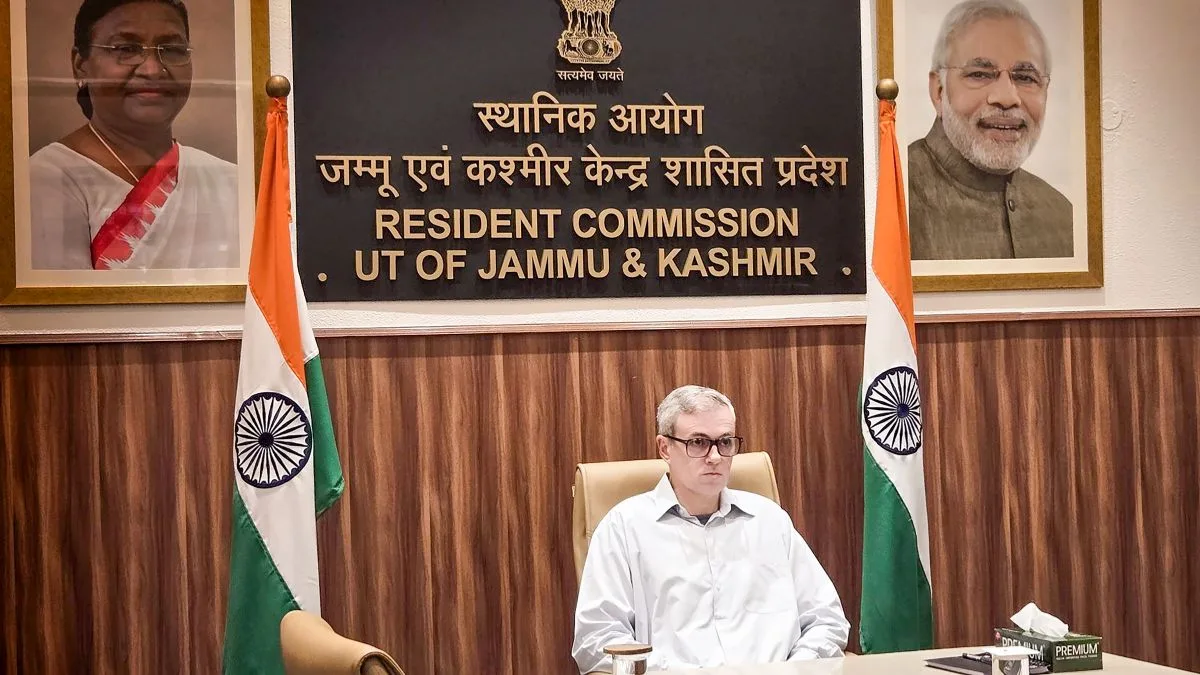
Chief Minister Omar Abdullah on Friday chaired a high-level meeting to review the flood situation in the Kashmir valley with a focus on rescue, relief and rehabilitation measures.
Divisional Commissioner Kashmir briefed the meeting on the water levels at Sangam, Ram Munshi Bagh and Asham, saying that the water level has receded below the danger mark.
Advertisement
He informed that personnel from I&FC, police, and other departments were patrolling vulnerable embankments and deploying sandbags where necessary.
Advertisement
He further reported that inundated villages in Shalina are witnessing receding waters and relief measures are underway for displaced families.
On the restoration front, the meeting was informed that water supply schemes are functioning smoothly with minor disruptions in a few places, while power, telecom, and health services remain largely unaffected. Essential supplies are being routed through Mughal Road, which has become the valley’s temporary lifeline.
The meeting was informed that Srinagar-Jammu National Highway (NH-44) is expected to be restored by tomorrow, with fruit-laden trucks currently being cleared via Mughal Road in a phased manner.
Deputy Commissioners of all the Valley districts also shared ground reports, confirming that water levels are receding in the Jhelum’s tributaries, including Lidder, Vaishow, Sandran, Rambi Ara, and others.
Addressing the meeting, Chief Minister Omar Abdullah directed immediate reinforcement of embankments at vulnerable spots, evacuation of residents from inundated areas, and round-the-clock monitoring through control rooms.
He emphasized the importance of frequent visits to affected areas and timely advisories urging people to remain alert, avoid panic and fully cooperate with the administration.
The Chief Minister instructed officials to ensure uninterrupted arrangements for evacuees, close coordination with the police to maintain order, and strict countering of rumour-mongering to prevent unnecessary panic. He underscored the need for swift restoration of essential services, including electricity, water supply and road connectivity.
Calling the next 48 to 72 hours “critical,” the Chief Minister said, “The level of vigilance currently being maintained must continue until the water recedes below the danger mark. Our deployed teams must remain fully active on the ground, and continuous monitoring of bunds should be carried out. Any leakages or breaches must be addressed without delay. ‘While the respite from continuous rainfall has improved the situation compared to two days ago, we cannot afford complacency.”
He further stressed the need for damage assessment to pave the way for relief and compensation measures.
“Deputy Commissioners must conduct realistic assessments of the damage caused to property, agricultural lands, and infrastructure. These findings will form the basis for projecting requirements to the Government of India,” he noted.
To support immediate relief operations, the Chief Minister announced the utilization of Rs 5 crores from the UT CapEx budget, in addition to funds from the State Disaster Response Fund (SDRF).
The Chief Minister also asked Deputy Commissioners and Agriculture Department officials to assess damage to standing crops across both divisions.
The meeting was attended by Deputy Chief Minister Surinder Kumar Choudhary, Minister for Health & Medical Education Sakina Itoo, Minister for Jal Shakti Javed Ahmad Rana, and advisor to the Chief Minister Nasir Aslam Wani.
Advertisement